White tanks
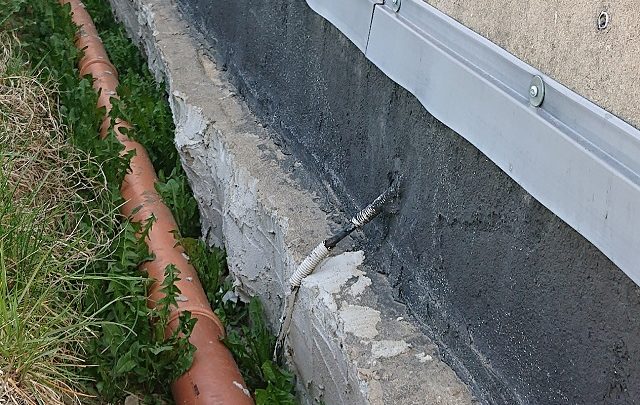
Base plate and outer walls of new buildings can be constructed as closed tank by using concrete with high waterproofness. As no sealing is necessary such constructions are called “white” tanks. The measure is comparatively expensive.
Predefined flow routes aiming on diverting surface water away from building can be built on the property or along its boundaries, e.g. by a change in gradient, ground sills, creation of depressions or by building of water diverting structural elements like walls. Areas on the property such as basins or trenches may be constructed for…
Requirements are expressed when granting building permissions, in order to prevent negative consequences of pluvial floods for buildings and for third parties.
Natural or artificially created detention basins and depressions with a specific retention capacity can be used as temporary water reservoir for runoff water during heavy rainfall. They slow down the surface runoff; thus they contribute to a delay and attenuation of flood waves. They should be located at the deepest point in almost any surrounding…
If water cannot (or can only insufficiently) be prevented from entering the building, predefined flow routes in the building may help to minimise the damage. Ideally, provisions should be made for relief openings in the building to ensure that the water can flow away.
Land-use planning is an effective instrument to reduce future heavy rain risk. The heavy rain risk can decrease significantly, if changes of use, adjustments of use, restrictions of use or heavy rain-adapted construction and development in flood prone areas are considered in both phases of planning: formulation and implementation of plans. The power of the…